
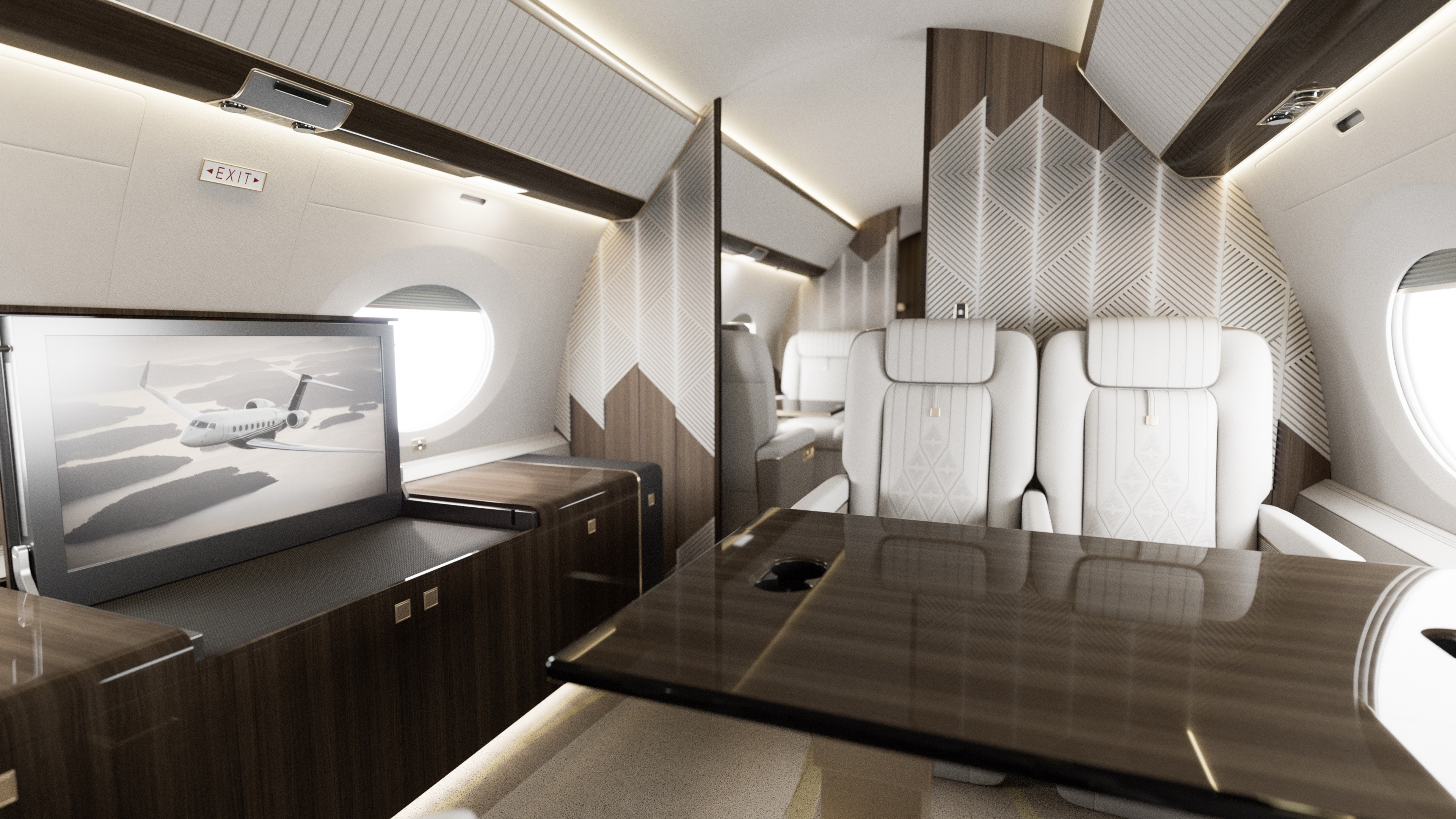
Leather Surface Exploration for Interior Applications
AERISTO
Award: Winner — Leathers / Wallcoverings Category, International Yacht & Aviation Awards 2025
Collaboration: Design partnership with Salvador Ortiz
Award: Winner — Leathers / Wallcoverings Category, International Yacht & Aviation Awards 2025
Collaboration: Design partnership with Salvador Ortiz
Project Overview
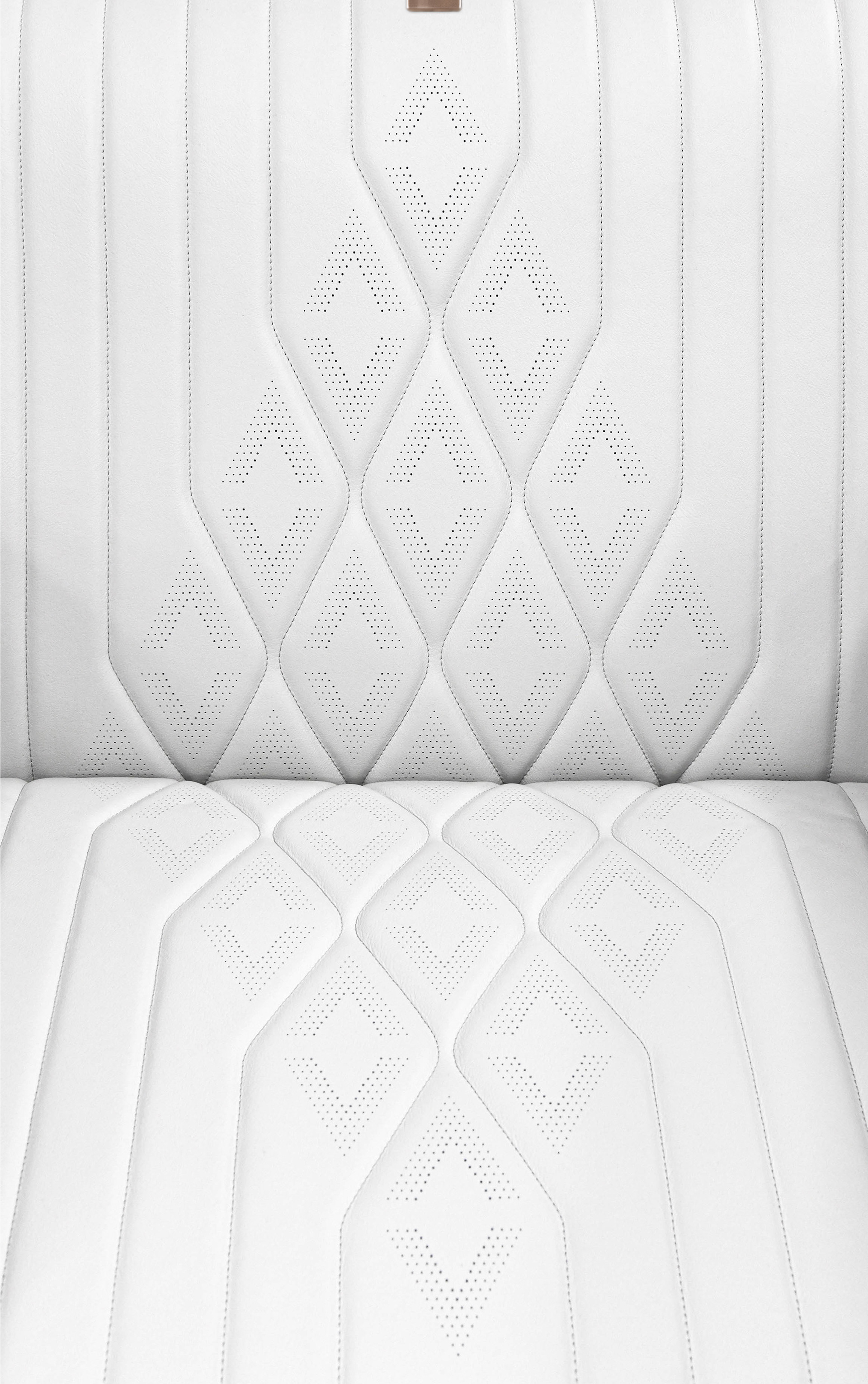
Horizon is a material-driven exploration focused on how leather can be used as a surface element within interior environments. The project examines rhythm, spacing, and repetition through mathematically driven perforation patterns, paired with intentional color selection and tactile detailing.
This project was developed as a collaborative effort, blending concept development, technical exploration, and visual storytelling.
My Role
Salvador Ortiz led the rendering and visualization of the interior concepts, while we partnered closely to ensure alignment between digital design and physical material execution. I supported Horizon across multiple phases of development, working closely with the design director to shape both the aesthetic and technical direction of the project.
My responsibilities included:
- Assisting with overall design direction and style language
- Developing perforation concepts and layouts
- Research into parametric patterning and surface systems
- Leather color selection and material pairing
- Photography and visual documentation of the final work
The Challenge
The goal was to create a leather surface concept that felt intentional and restrained, while still showcasing technical depth. The design needed to balance visual interest with repeatability, precision, and real-world application.
Design Approach
Rather than relying on intuitive placement, Horizon was built on a system where every line and perforation had a defined relationship to the next. This approach allowed the surface to feel calm and ordered, even as patterns became more complex.
The focus was not on creating a single pattern, but on developing a framework that could adapt across scales and applications.
Technical Exploration & Tools
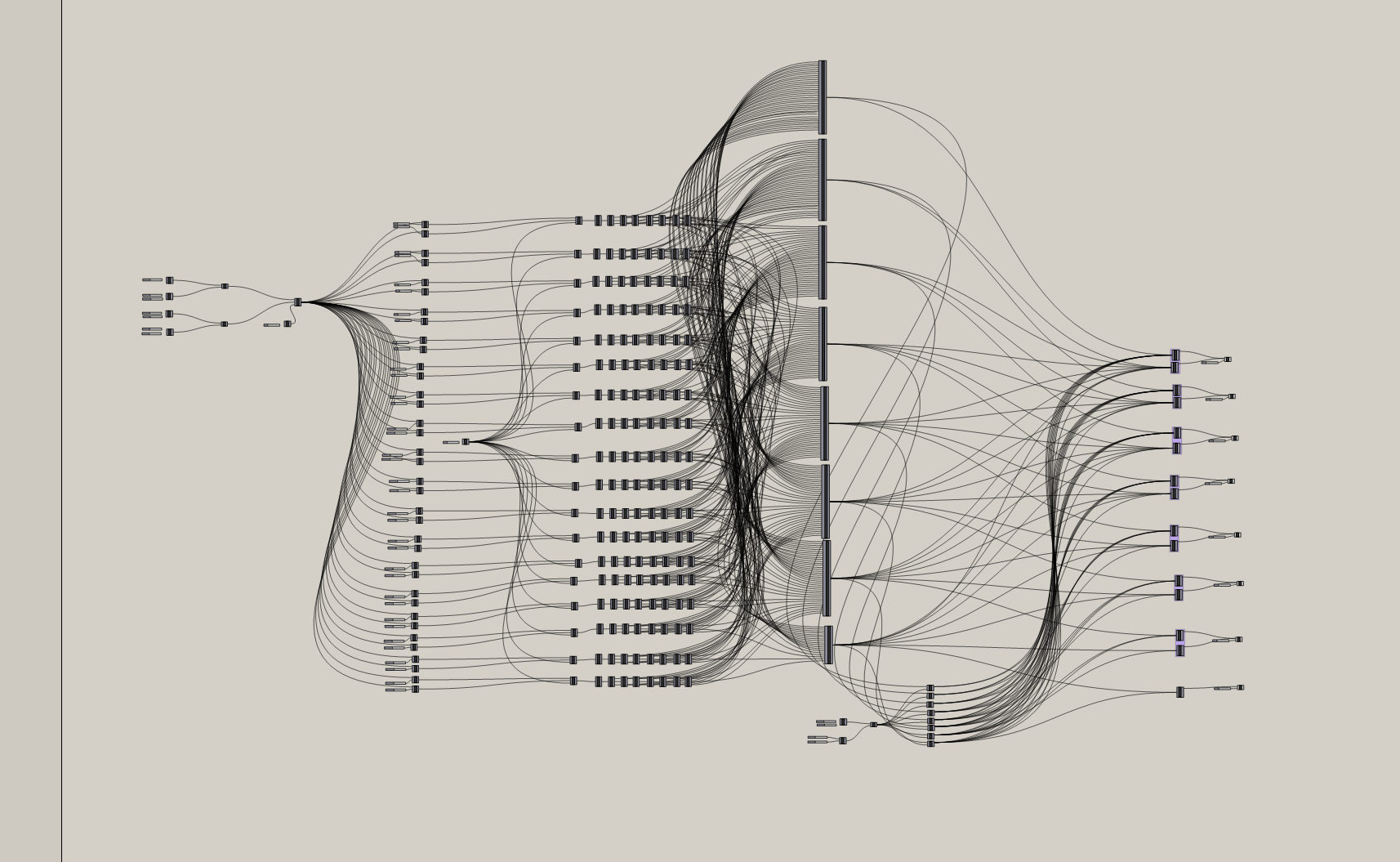
A key component of Horizon was learning and applying parametric design principles to leather surfaces.
Using Rhino and Grasshopper, perforation layouts were generated through mathematical relationships rather than manual placement. This ensured:
- Consistent spacing and alignment
- Controlled variation across the surface
- Scalability without losing visual balance
This process allowed patterns to be adjusted dynamically, making the design both flexible and precise while maintaining cohesion.
Material & Color Direction
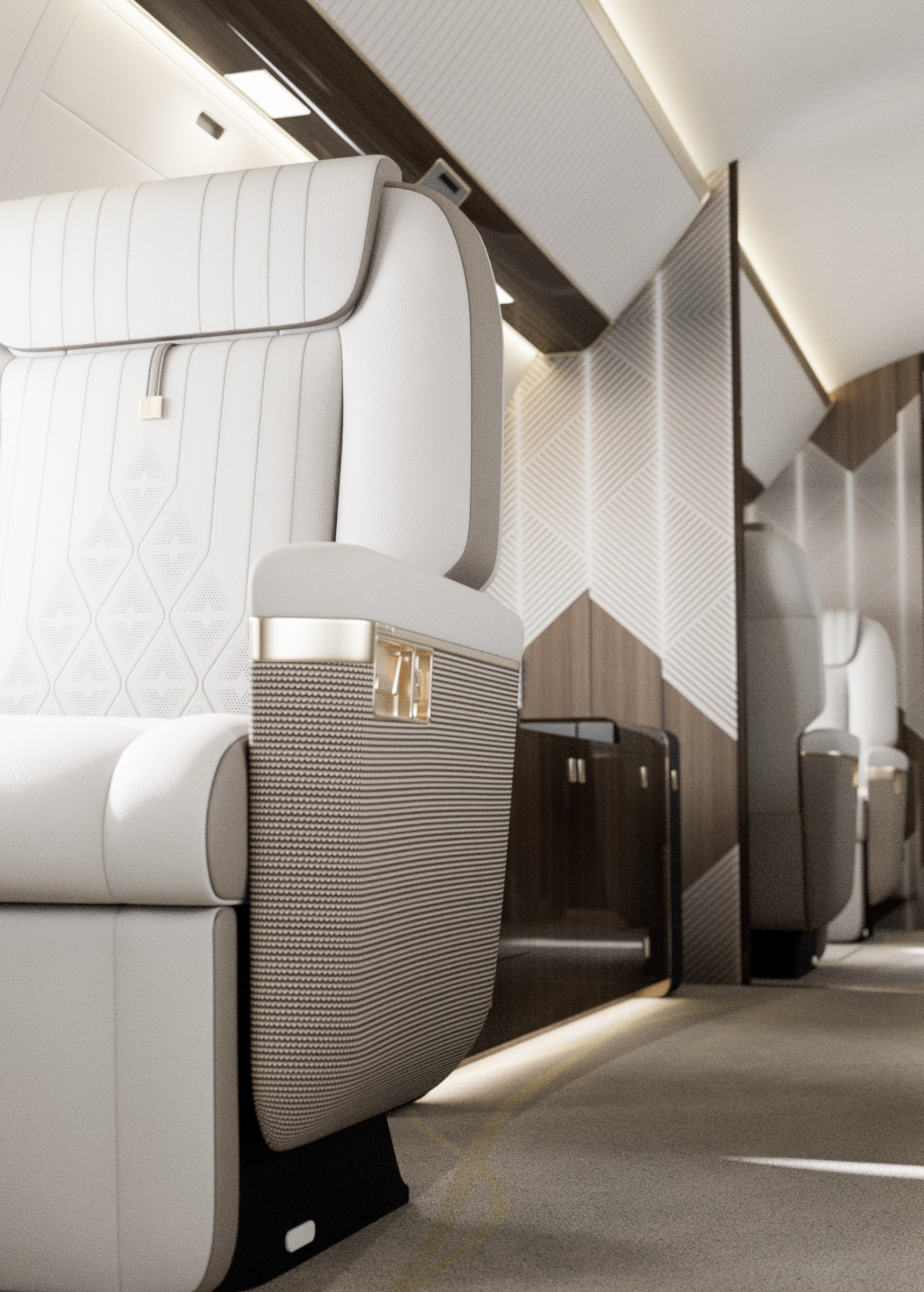
Leather color selection played a critical role in how the perforation work was perceived. Colors were chosen to enhance depth, shadow, and contrast which allows the surface detail to remain legible without overpowering the overall environment.
Material choices were evaluated not only visually, but also for how they interacted with light, texture, and surrounding elements within an interior context.
Outcome
Horizon was recognized as a Winner in the Leathers / Wallcoverings Award category at the International Yacht & Aviation Awards 2025, highlighting its integration of material design, technical structure, and interior application.
The project stands as a representation of collaborative design—where research, parametric systems, and material sensitivity come together to form a cohesive surface language.
Reflection
Working on Horizon expanded my understanding of how mathematical systems can support creative decision-making rather than restrict it. The project reinforced the value of collaboration, especially when bridging conceptual design, digital tools, and physical materials.